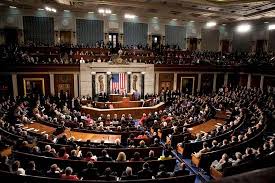
Article I of the United States Constitution establishes the Legislative Branch, also known as Congress. It is responsible for making laws, controlling government finances, and representing the people. As the first and longest article, it reflects the importance of lawmaking in a democratic system.
Structure of Congress
Article I creates a bicameral legislature, meaning Congress has two separate chambers:
1. House of Representatives
Represents the population
Members are elected every 2 years
Number of representatives is based on state population
Has special powers like initiating revenue (tax) bills and impeachment
2. Senate
Represents the states equally
Each state has 2 senators
Senators serve 6-year terms
Has powers to approve treaties and confirm presidential appointments
Powers of Congress (Section 8)
Article I, Section 8 lists the enumerated powers of Congress:
To levy and collect taxes
To regulate interstate and foreign commerce
To coin money and regulate its value
To declare war
To raise and support armies and navy
To establish post offices
To make laws necessary and proper (Necessary and Proper Clause)
Implied Powers
Through the Necessary and Proper Clause, Congress can make laws not explicitly mentioned but needed to carry out its duties. This gives flexibility to adapt to changing times.
Limits on Congress (Section 9)
Article I also sets restrictions:
Cannot pass ex post facto laws (retroactive laws)
Cannot grant titles of nobility
Must follow due process
Cannot suspend habeas corpus except in emergencies
Powers Denied to States (Section 10)
States are also restricted:
Cannot make treaties
Cannot coin money
Cannot pass laws impairing contracts
Lawmaking Process
The Constitution outlines how laws are made:
A bill is introduced in either House or Senate
It is debated, amended, and voted on
Both chambers must approve
Sent to the President for approval or veto
Importance of Article I
Ensures representation of both people and states
Prevents concentration of power
Provides checks on executive authority
Forms the backbone of democratic governance
Conclusion
Article I is the foundation of the United States legislative system. By defining Congress’s structure and powers, it ensures that laws are created through a balanced, representative, and accountable process.
Technology
Article I of the US Constitution: Legislative Branch Powers, Structure and Functions
Tags
4,071
Views
343
Words
2 min read
Read Time
Apr 2025
Published